Dealt a rough hand
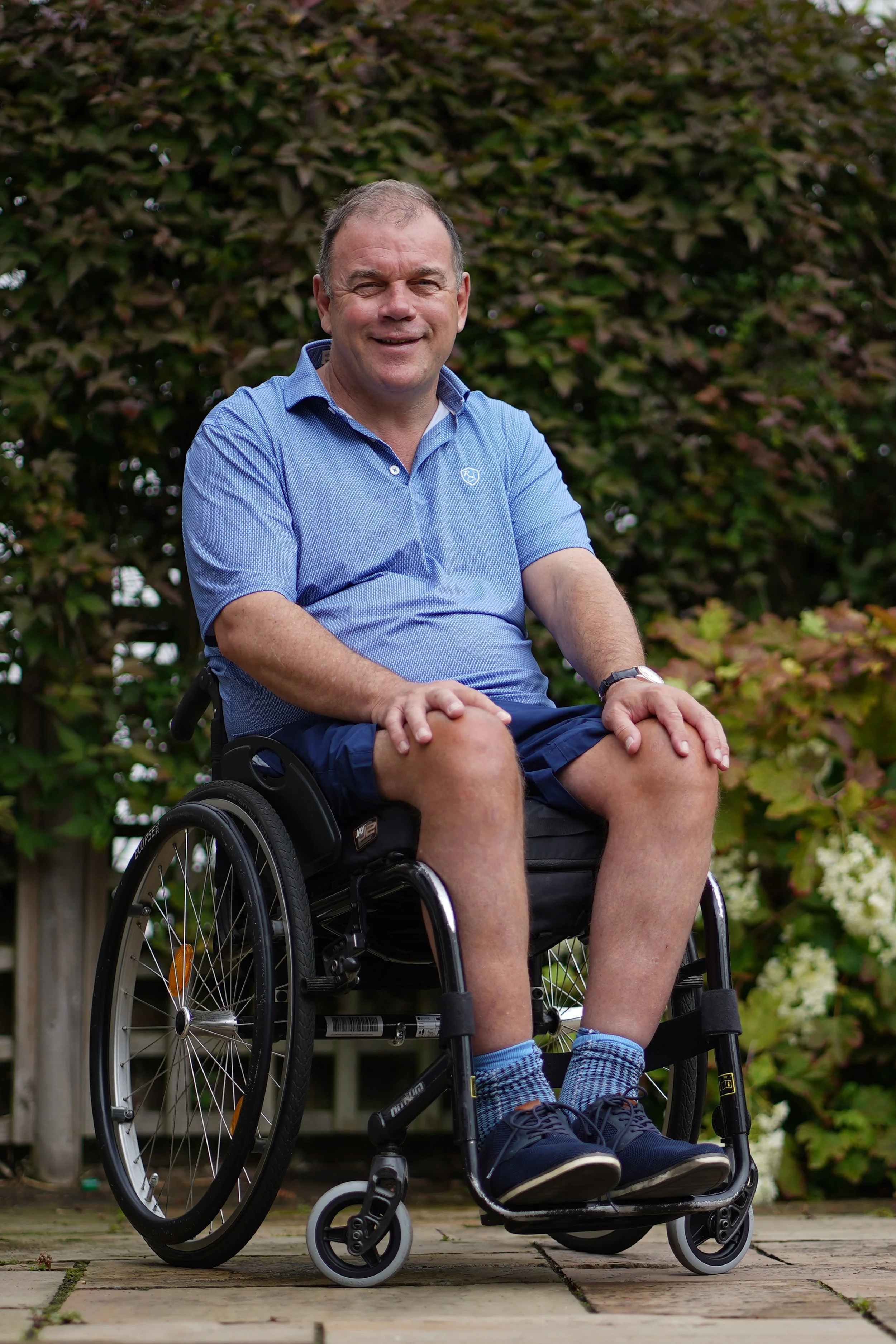
Before my skiing accident in 2019, sport was a huge part of my life. I had played rugby, loved golf, skied whenever I could and generally enjoyed anything competitive. If there was a challenge, I wanted to take it on.
Everything changed during a skiing trip to Austria when I was involved in a collision on the slopes. I suffered a severe spinal injury and was airlifted to hospital before spending almost six months in rehabilitation back in Scotland.
I can still remember seeing the X-rays for the first time. My back had broken at almost 90 degrees. Looking at them, I genuinely thought, "Game over."
Life changed overnight. Things I had never thought twice about suddenly became difficult or impossible. Instead of planning holidays and weekends away, I was focused on rehabilitation and learning how to navigate life in a wheelchair.
I've always been competitive, though, and I was determined not to let the injury stop me from enjoying life.
While I was in hospital, a group of close friends used to travel through to see me. They'd bring pizzas, a pack of cards and we'd sit and play bridge together. At the time, I didn't realise how important those afternoons would become.
I'd played bridge socially before the accident with my wife Clare and a group of friends, but it was during my recovery that I started to take the game seriously.
The more we played, the more I enjoyed it. The problem was that my friends were better than me, and I wasn't particularly happy about that. So I started taking lessons.
I joined bridge clubs, practised online and began trying to learn as much as I could. These days I still spend time studying the game almost every day because one of the best things about bridge is that there's always something new to learn.
That's what appeals to the competitive side of me.
With many sports, you eventually reach a point where improvement becomes harder and harder. Bridge feels different. No matter how much you play, there is always another level to reach, another idea to learn and another challenge waiting for you. It's a game that constantly keeps your brain working.
The social side is a huge part of it too. Through bridge I've met fantastic people and made new friendships that I probably wouldn't have made otherwise. Whether you're playing at a club, online or away on a bridge holiday, there's always someone willing to help you improve and enjoy the game.
I still play golf today, although I had to relearn my swing and now play one-handed. I've also taken up wheelchair curling and continue to look for new challenges wherever I can find them.
If someone had told me ten years ago that I'd be playing bridge several times a week, studying conventions and going on bridge holidays, I would probably have laughed. Now it's become a huge part of my life.
Looking back, there are still moments when I miss some of the things I used to do before my accident. That's natural. But I've learned that dwelling on what you've lost doesn't help you move forward. What does help is finding new things to be passionate about.
Bridge has given me competition, friendship, challenge and a community of people who have made the journey incredibly enjoyable. Most importantly, it's given me something I still look forward to every single week.
The best part is that no matter how much I learn, I know there's always room to improve.
Stewart Mackay